Sie sind hier: Startseite » Abfahrtslauf am Kreuzeck
Beispielnachricht 1
Beispielnachricht 2
Beispielnachricht 1
Beispielnachricht 2
Sie sind hier: Startseite » Abfahrtslauf am Kreuzeck
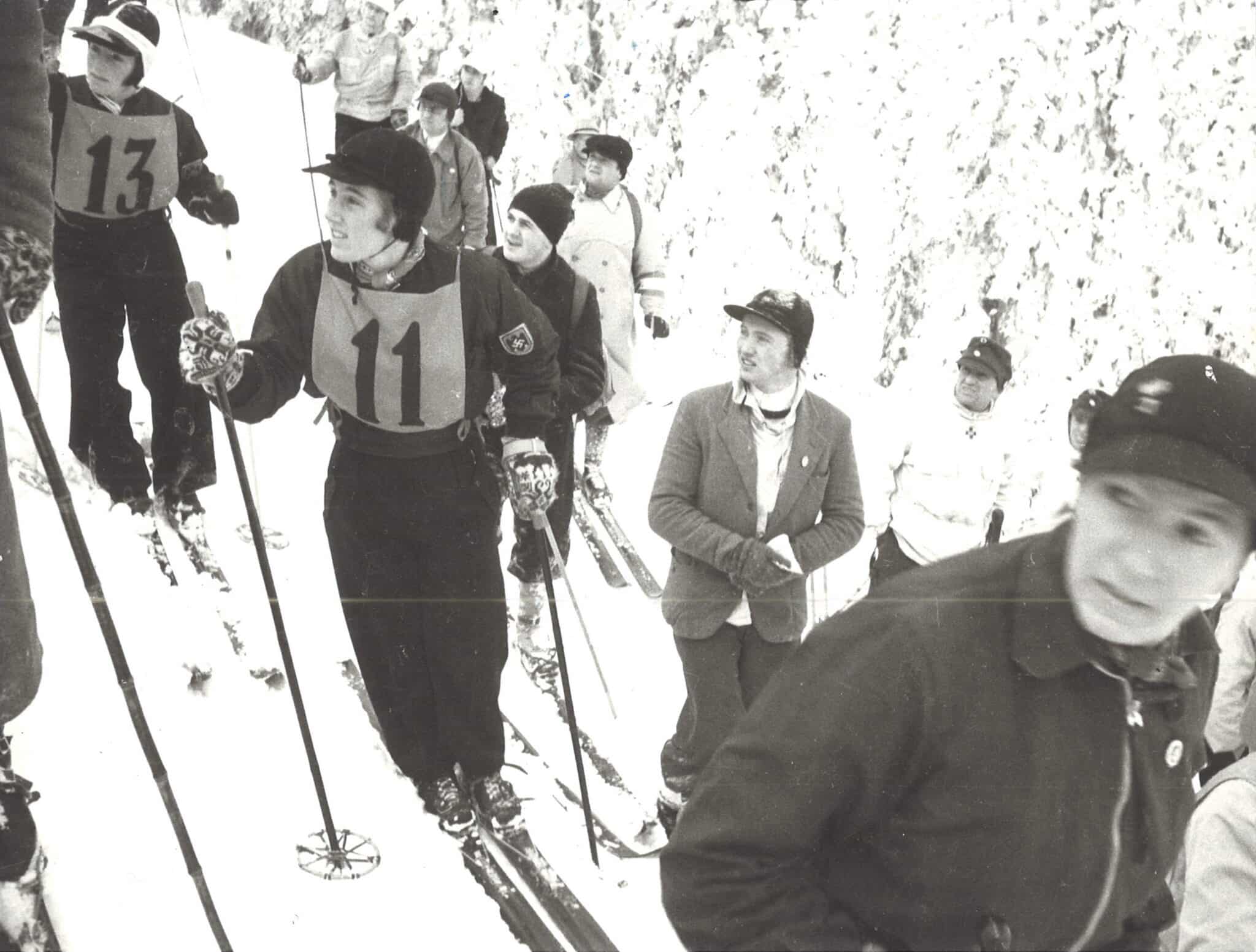
Im Rahmen der Olympischen Winterspiele 1936 fanden erstmals Wettbewerbe in der Alpinen Kombination, bestehend aus Slalom und Abfahrt, statt.
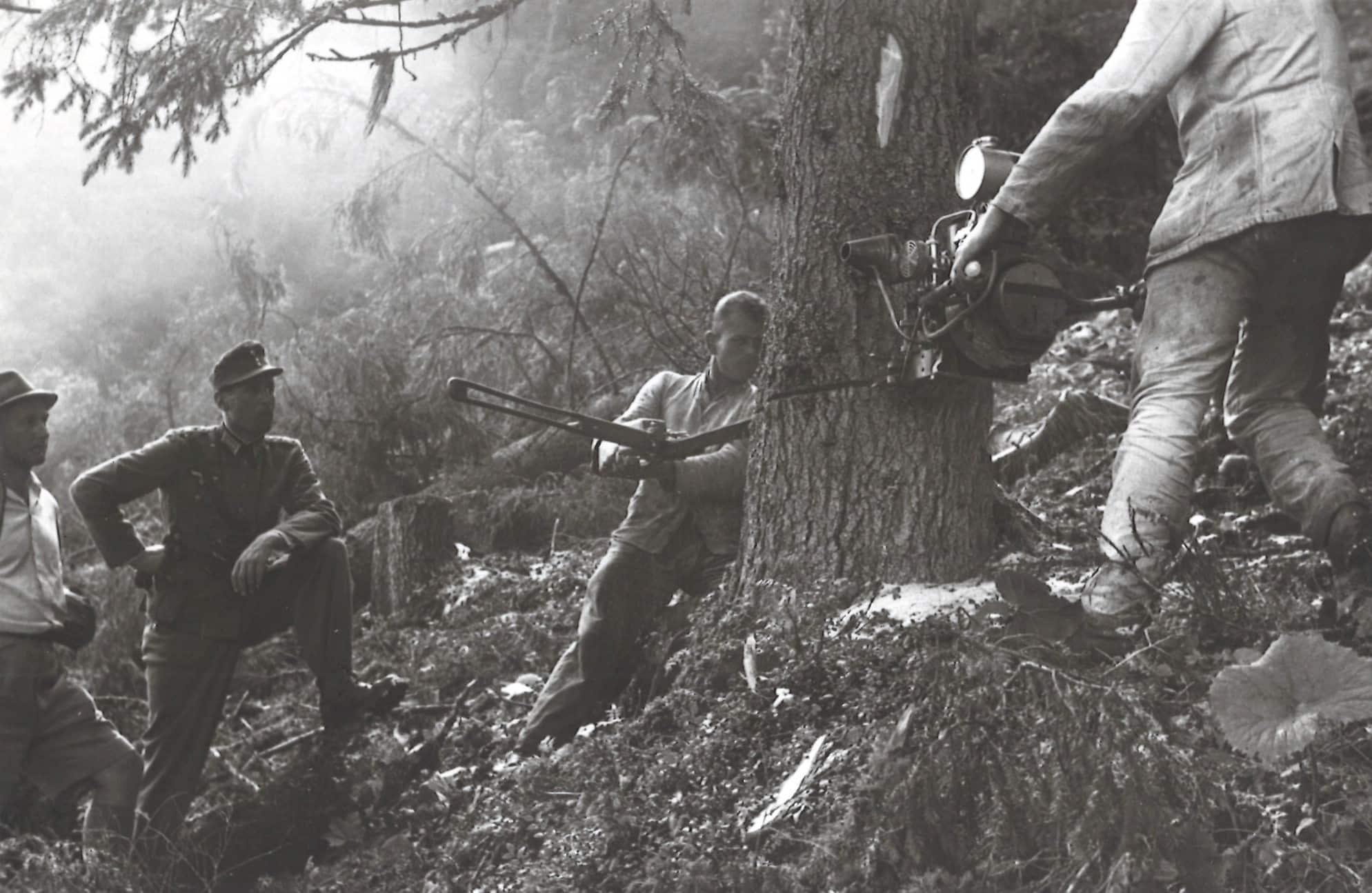
Um den Abfahrtslauf am Kreuzeck zu ermöglichen, waren im Vorfeld aufwendige Baumaßnahmen notwendig. Im Auftrag des Organisationskomitees wurden Felsen gesprengt, Bäume gefällt und Wildbäche überbrückt.
Am Ende bestimmten der Internationale Skiverband (FIS) und die örtlichen Verantwortlichen die sogenannte Neunerstrecke, also die heutige Olympia-Abfahrt, zur offiziellen Abfahrtsstrecke.
Die Prüfung der mechanisch-elektrisch funktionierenden Stoppuhr ergab, dass die Zeiten der Abfahrtsläuferinnen und Abfahrtsläufer schon damals auf Fünftelsekunden genau gemessen werden konnten. Für die geplanten Winterspiele 1940 baute das Gebirgs-Jäger-Regiment 98 die Abfahrtsstrecke am Kreuzeck aus. Das Ergebnis war eine breitere und flüssigere Abfahrtsspur, die höhere Geschwindigkeiten ermöglichte. Während die Olympiabestzeit der alten Strecke 1936 bei 4:51,8 Minuten lag, sank diese bei der ersten Probefahrt der ausgebauten Strecke auf 4:08 Minuten.
Das Slalomrennen fand am Gudiberg unweit des Olympia-Skistadions statt.
Die Olympia- und die Kandahar-Abfahrt gehören heute zum Skigebiet Garmisch Classic, das sich vom Hausberg über das Kreuzeck bis zum Osterfelder erstreckt. Bei den Olympischen Winterspielen 1936 diente die heutige Olympia-Abfahrt als Rennstrecke. Die Kandahar-Abfahrt wurde dagegen erst beim traditionellen Arlberg-Kandahar-Rennen im Jahr 1954 Austragungsort. Die Strecke wurde 1969/1970 in den Ski-Welt-cup integriert und 2008 anlässlich der Ski-Weltmeisterschaft 2011 umgebaut und den FIS-Sicherheitsstandards angepasst. Dabei wurde der „Freie Fall“ mit einem Gefälle von 92 Prozent als steilstes Streckenelement im gesamten Weltcup eingeführt.
As part of the 1936 Winter Olympic Games, competitions in the Alpine Combined event—consisting of slalom and downhill—were held for the first time. Extensive construction work was required in advance to make the downhill race at Kreuzeck possible. On behalf of the organizing committee, rocks were blasted, trees felled, and mountain streams bridged.
Ultimately, the International Ski Federation (FIS), together with local officials, designated the so-called “Neuner Course”—today’s Olympic Downhill—as the official downhill course. Tests of the mechanically and electrically operated timing system showed that downhill times could already be measured to an accuracy of one-fifth of a second.
For the planned 1940 Winter Olympic Games, the Mountain Infantry Regiment 98 upgraded the downhill course at Kreuzeck. The result was a wider and smoother track that allowed for higher speeds. While the Olympic best time on the original course in 1936 was 4:51.8 minutes, it dropped to 4:08 minutes during the first test run on the redesigned course.
The slalom event took place at Gudiberg, close to the Olympic Ski Stadium.
USE AFTER 1945
Today, both the Olympic Downhill and the Kandahar Downhill are part of the Garmisch Classic ski area, which stretches from Hausberg via Kreuzeck to Osterfelder. During the 1936 Winter Olympic Games, the course now known as the Olympic Downhill served as the official race track. The Kandahar Downhill, by contrast, was first used as a competition venue during the traditional Arlberg–Kandahar Race in 1954.
The course was integrated into the Alpine Ski World Cup in 1969/1970 and was extensively redesigned for the 2011 World Championships, with construction completed in 2008 to meet FIS safety standards. As part of this upgrade, the “Free Fall” section was introduced, featuring a gradient of 92 percent and ranking as the steepest section in the entire World Cup circuit.
Dann kontaktieren Sie uns einfach jederzeit unter folgenden Kontaktmöglichkeiten:
Sie sehen gerade einen Platzhalterinhalt von Vimeo. Um auf den eigentlichen Inhalt zuzugreifen, klicken Sie auf die Schaltfläche unten. Bitte beachten Sie, dass dabei Daten an Drittanbieter weitergegeben werden.
Mehr InformationenSie sehen gerade einen Platzhalterinhalt von YouTube. Um auf den eigentlichen Inhalt zuzugreifen, klicken Sie auf die Schaltfläche unten. Bitte beachten Sie, dass dabei Daten an Drittanbieter weitergegeben werden.
Mehr InformationenSie sehen gerade einen Platzhalterinhalt von Google Maps. Um auf den eigentlichen Inhalt zuzugreifen, klicken Sie auf die Schaltfläche unten. Bitte beachten Sie, dass dabei Daten an Drittanbieter weitergegeben werden.
Mehr InformationenSie sehen gerade einen Platzhalterinhalt von Google Maps. Um auf den eigentlichen Inhalt zuzugreifen, klicken Sie auf die Schaltfläche unten. Bitte beachten Sie, dass dabei Daten an Drittanbieter weitergegeben werden.
Mehr InformationenSie sehen gerade einen Platzhalterinhalt von Mapbox. Um auf den eigentlichen Inhalt zuzugreifen, klicken Sie auf die Schaltfläche unten. Bitte beachten Sie, dass dabei Daten an Drittanbieter weitergegeben werden.
Mehr Informationen