Garmisch-Partenkirchen 1936
IV. Olympische Winterspiele
„Die Kehrseite der Medaille"
“Truth is within reason for humans.“ (Ingeborg Bachmann, author)
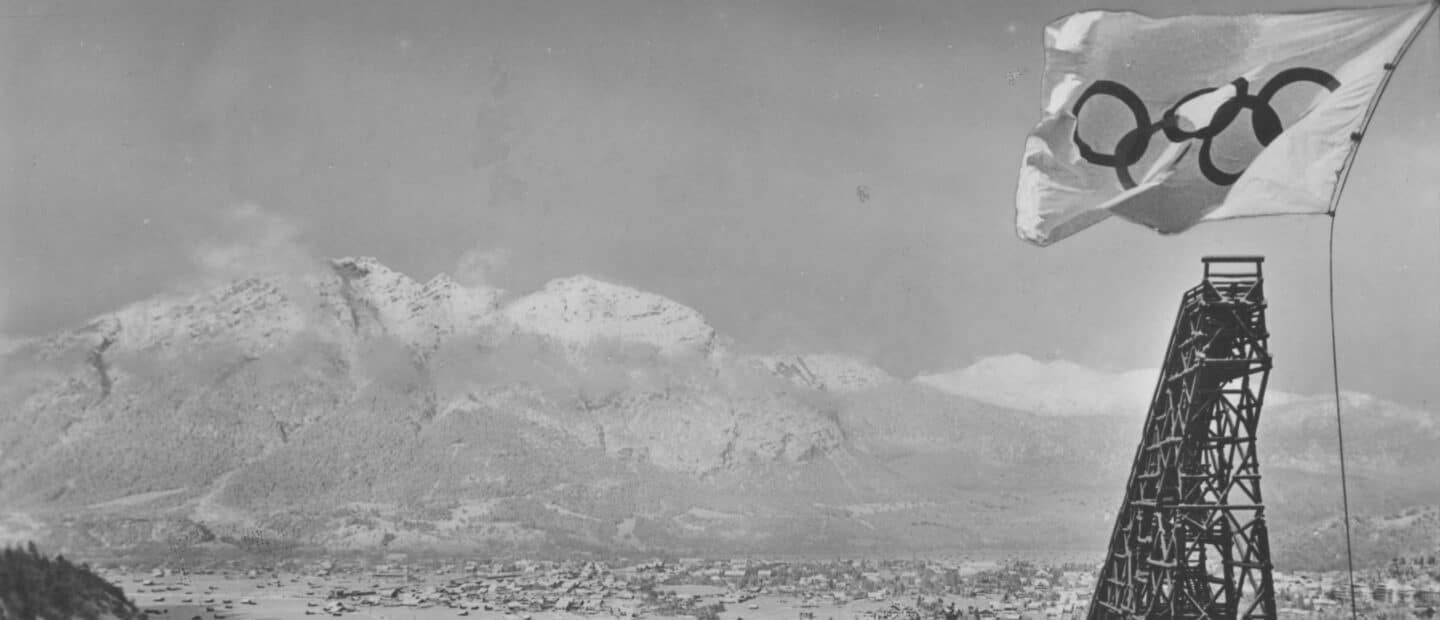
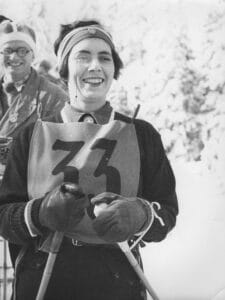
The IV. Olympic Winter Games took place between 6 February and 16 February 1936, hosted by Garmisch-Partenkirchen. The emanating fascination for winter sports was used by the National Socialists exclusively for their own goals. Almost perfect organization, logistics, newly built elaborate competition sites conveyed the image of an allegedly peaceful Germany to the world. Behind the sportive curtain, the NS regime continued consequently to suppress political opponents and Jewish citizens, rearmament was further pressed ahead.
Coming to terms with the history of these Winter Games started very late – only in the context of the FIS Alpine World Ski Championships of 2011 with the exposition “The Flipside of the Medal” and the corresponding catalog. The permanent exhibition is revised these days, but a virtual tour is possible. The detailed documentary “The Other Side of the Coin” is no longer available in bookstores. You can access the online version for free here.
Since spring 2026, a new circular walking trail, "Traces of History" has been available in the town. Information panels at various locations along the trail explain the history of the town's sports and event venues. Click here for more information about the trail. Read more

In 1931, the IOC assigned Berlin with the organization of the Summer Olympics. This gave the German Reich the right to define the venue of the IV. Winter Olympics as well. Because of the advantages concerning sports, organization and climate, the towns of Garmisch and Partenkirchen prevailed over other winter sports centers like Oberhof.
This did not remain without consequences for the two independent communities. On 1 January 1935, they were merged to the community of Garmisch-Partenkirchen. The fierce resistance of the town council members in Garmisch only stopped under the threat of Minister of the Interior Wagner’s to admit them into the concentration camp Dachau. You can find out more about here.
Read more
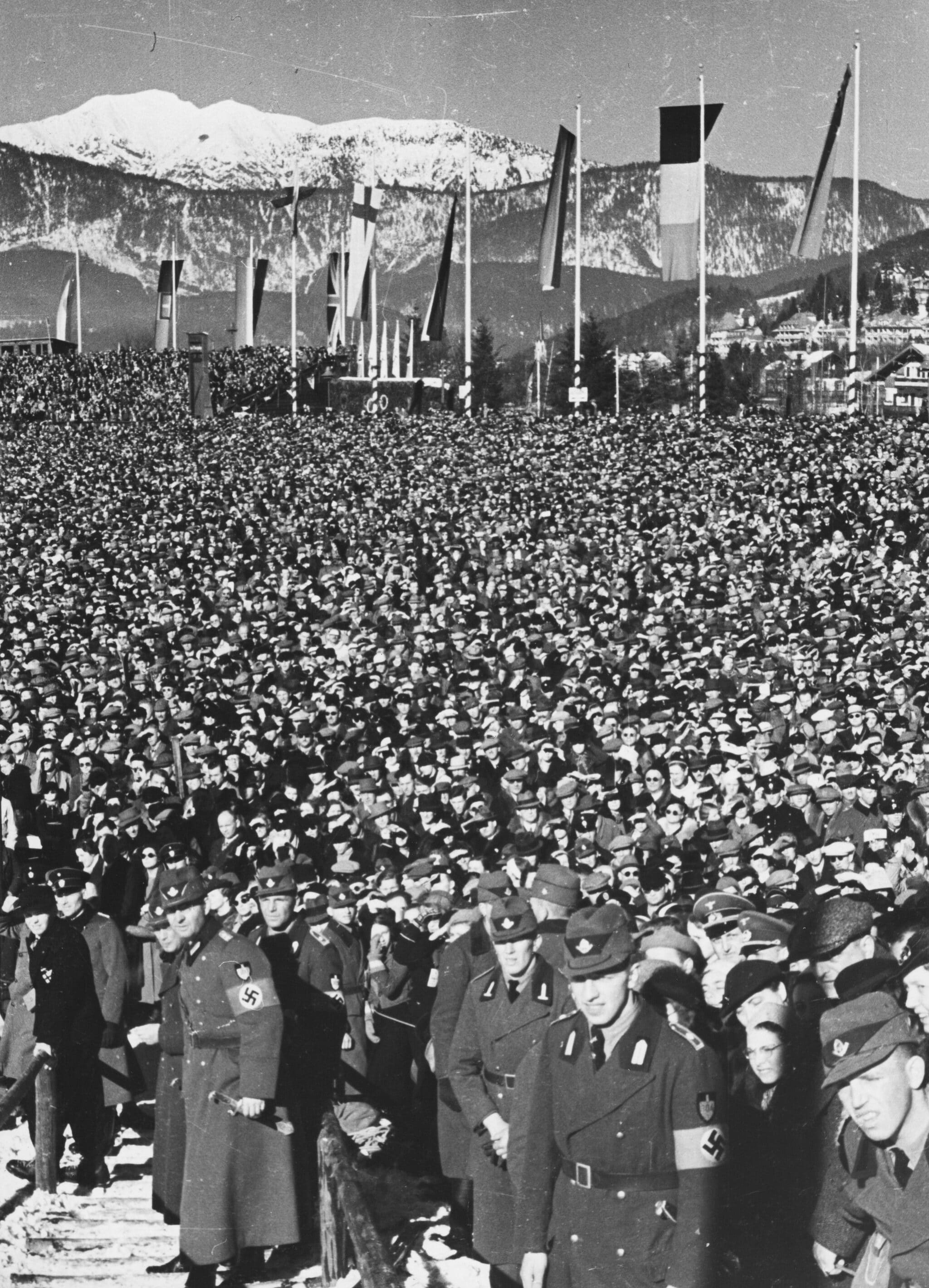
756 attendants from 28 nations competed in 17 disciplines. The ski jumping at the final day and the following closing ceremony with presentation of the medals at the Olympic Ski Stadium attracted around 130.000 visitors – and set a record.
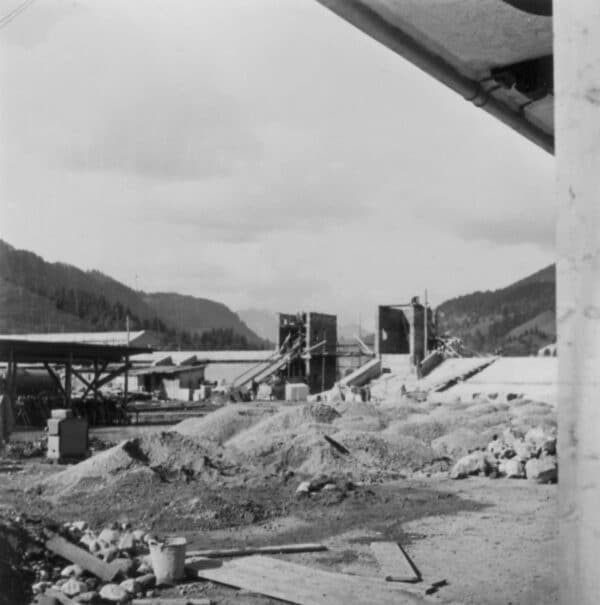
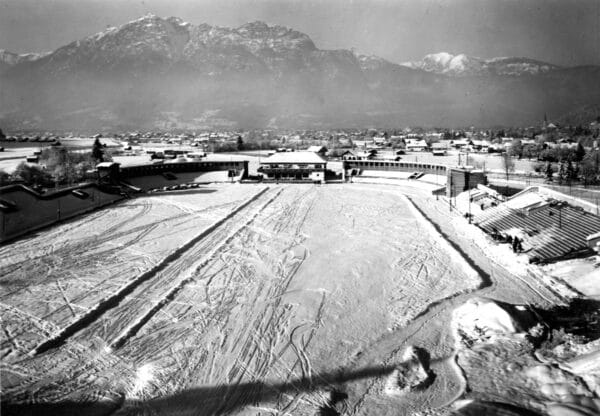
In addition to the newly built Olympic Ski Stadium with the big Olympic Jump the National Socialists built the Olympic artificial ice rink at record speed. The already existing Bob sled at the Rießersee was elaborately redesigned. Expenses for the sports sites added up to 1,257,700 Reichsmark
Olympia-Skistadion (deutsch)
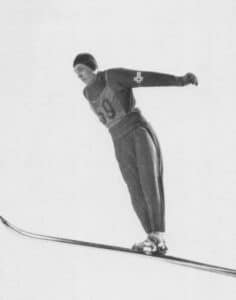
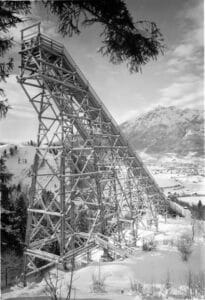
Am Gudiberg befand sich seit 1900 der wichtigste Wintersportplatz in Partenkirchen. Dort gab es bereits eine Rodelbahn, ein Eislaufareal und eine Sprungschanze, gebaut für die Deutschen Skimeisterschaften 1914. Sie wurde bereits für die „Deutschen Kampfspiele 1922“ ausgebaut, die nach dem Ausschluss Deutschlands von den Olympischen Spielen 1920 und 1924 als Ersatz abgehalten wurden.
Nachdem die Standortwahl auf das Gelände unterhalb des Gudibergs fiel, begannen im Herbst 1933 die Arbeiten. Im Winter 1934 endeten die Bauarbeiten der Großen Schanze, parallel bauten die Verantwortlichen die alte „Olympia-Schanze“ aus. Die Tribünen, Erdwälle und das Sporthaus entstanden ohne Maschinen nach dem Entwurf des Partenkirchner Gemeindebaumeisters Arnulf Albinger. Die Baukosten für das gesamte Areal betrugen 426.100 Reichsmark.
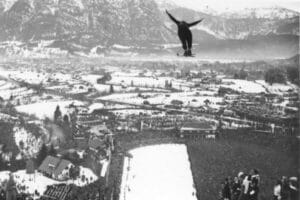
Olympic Ski Stadium (english)
Since 1900 the Gudiberg was the most important site for winter sports in Partenkirchen. Besides a sled run and an ice skating venue existed a jump built especially for the German Ski Championships in 1914. This jump was enlarged for the “Deutsche Kampfspiele 1922”, an event organized as compensation after Germany´s exclusion of the Olympic Games in 1920 and 1924. After the area below Gudiberg was chosen, construction works started in autumn 1933. In winter 1934, the construction works at the Big Jump ended; at the same time the “Old Olympic Jump” was upgraded by the organizers. The grandstands, the earth walls and the sports house were developed following the plan of Partenkirchen’s master builder Arnulf Albinger without the help of machines. Building costs for the whole area added up to 426,100 Reichsmark.
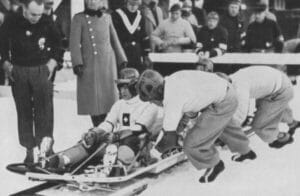
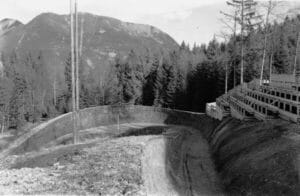
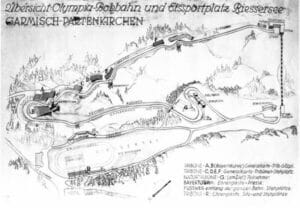
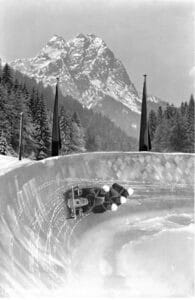
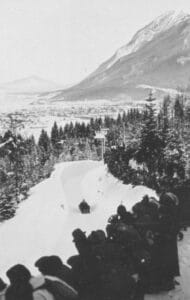
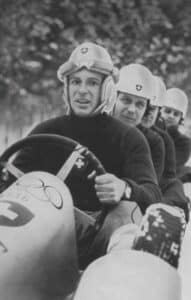
Olympia-Bobbahn (deutsch)
Die bereits seit 1909 bestehende Bobbahn oberhalb des Rießersees gestaltete der Berliner Architekt Stanislaus Zentzytzki vollständig um. Zentzytzki hatte schon für die Winterspiele 1932 die Anlage in Lake Placid entworfen.
Das spektakuläre Herzstück der Bobbahn war die sogenannte Bayernkurve, die mehrere olympische Athleten stürzen ließ.
Die weiteren Gebäude entlang der Bobbahn, wie das Start- und Zielhaus, waren aus Holz. Für die Wasser- und Stromversorgung installierte der Austragungsort eine Wasserleitung mit Hydranten und Stromleitungen. Die Baukosten summierten sich auf 238.000 Reichsmark.
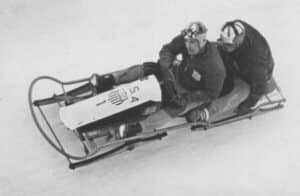
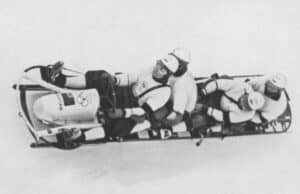
Olympic bobsled track (english)
The bob run above the Rießersee, already existing since 1909, was completely re-arranged by the Berlin architect Stanislas Zentzytzki. He had also created the run for the Winter Games 1932 in Lake Placid. The spectacular centerpiece of the bob run was the so called “Bayernkurve” turn, causing to overturn several Olympic athletes.
All other buildings along the track like the start- and finish house were wood constructions. For water and electric power supply the host town installed a water pipeline with hydrants and lines for power supply. The total of building cost added up to 238,000 Reichsmark.
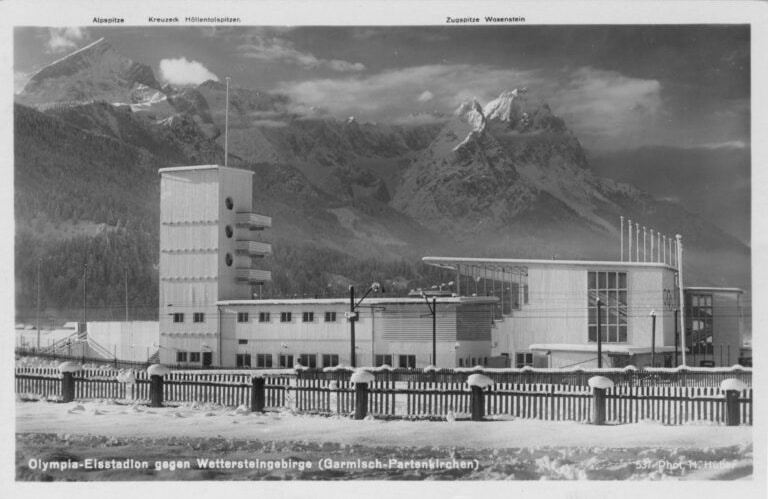
Olympia-Eisstadion (deutsch)
Als Standort des Eisstadions bestimmte das NS-Regime das vom Architekten Hanns Ostler vorgeschlagene Areal am Bahnhof. Die zentrale Lage und die unmittelbare Nähe zum Bahnhof und zur Post begünstigten diese Entscheidung.
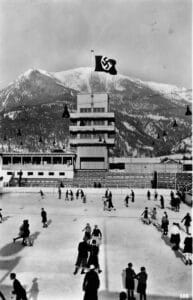
Die 30 x 60 Meter große Kunsteisfläche umschloss eine teils überdachte Tribüne für 8.250 Zuschauer. Im Inneren der Haupttribüne fanden Umkleiden, Büros und ein Restaurant Platz. Der markante Turm beherbergte schalldichte Rundfunkkabinen.
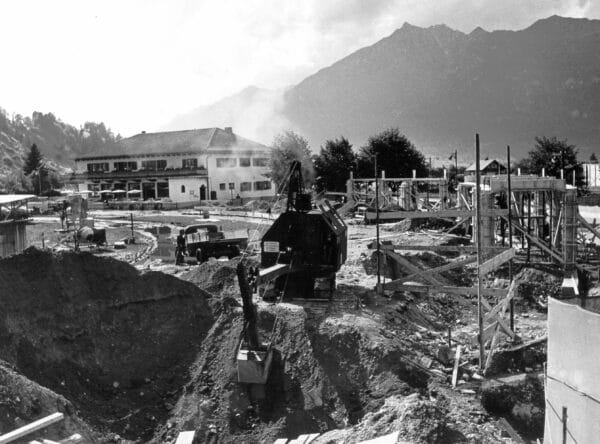
Es mussten 22 Kilometer Rohre verlegt werden, um die Kühlung der Eisfläche mittels des Ammoniak-Verfahrens zu ermöglichen, trotzdem war das Olympia-Eisstadion nach 106 Tagen ohne Einsatz von Maschinen betriebsbereit. Die neue Sportstätte kostete 550.000 Reichsmark.
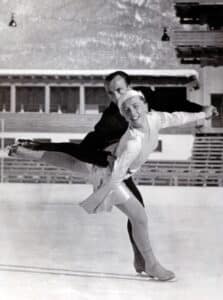
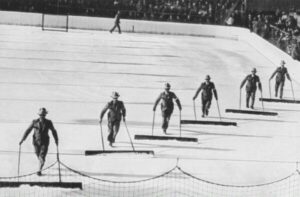
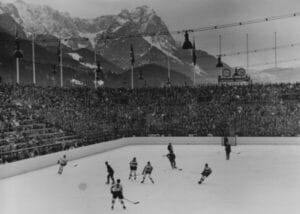
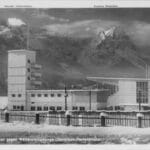
Olympic Ice Stadium (english)
The NS regime decided the area around the station to be the location for the Olympic Ice Rink., following the proposal of architect Hanns Ostler. The decision was favored because of the central position and direct proximity to the station and the post office. The artificial ice rink with a measurement of 30 x 60 meters was surrounded by partly sheltered grandstands for 8,250 visitors. Inside of the main grandstand were placed locker and medical supply rooms, offices and a restaurant. A striking tower hosted sound booths. 22 km of pipes had to be laid to enable cooling the ice by the ammonia method. Still the Olympic Ice Stadium was ready after only 106 days without the use of machines. The new venue cost 550,000 Reichsmark.
Eissport auf dem Rießersee (deutsch)
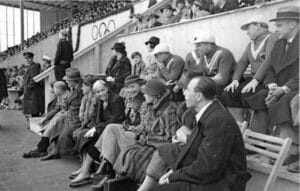
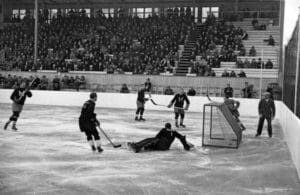
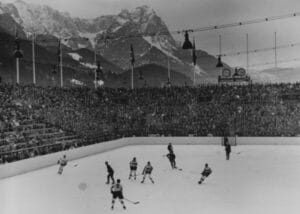
Den Rießersee, vorgesehen für Eisschnelllaufwettbewerbe, Eisschießen und einzelne Eishockeyspiele, bauten die Organisatoren zu einem Eissportplatz aus. Eine Tribüne für 2000 Zuschauer, schalldichte Kabinen für die Rundfunksprecher und ein Kampfrichtergebäude am Ziel formten den Rießersee zu einer Sportstätte. Besonders kurios war ein Turm auf Schlittenkufen, der Filmaufnahmen aus nächster Nähe ermöglichte.
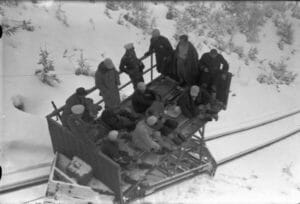
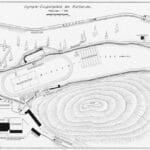
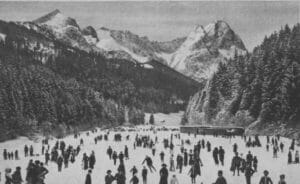
Ice sports on the Rießersee (english)
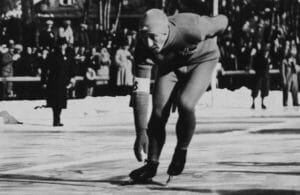
The Rießersee was developed by the organizers to become an ice sports venue for speed skating, some ice hockey games and icestocksport. A grandstand for 2,000 visitors, sound booths for broadcasters and a building for the referees at the finish line were installed. A curiosity was the tower on skids to enable close-up shootings.


Slalom (deutsch)
Die Suche nach einer Slalomstrecke gestaltete sich sehr schwierig. Zur Auswahl standen der Nordhang des Hausbergs, ein neuer Hang am mittleren Kochelberg oder der Gudiberg, direkt neben der Großen Olympiaschanze.
Am Vortag der Eröffnung der Spiele lag nur eine dünne Schneedecke am Gudiberg, weshalb die Organisatoren zur Strecke am mittleren Kochelberg tendierten. Erst der am Eröffnungstag einsetzende Schneefall ermöglichte die Damen- und Herren-Rennen am Gudiberg.
Slalom (english)
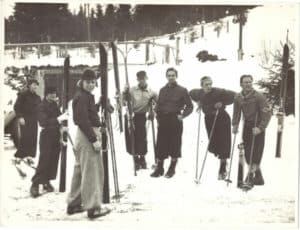
The search for a slalom course was difficult. Up for discussion were the northern slope of the Hausberg, a new slope at the middle Kochelberg and the Gudiberg, located directly next to the big Olympic Jump. The day before the opening, the Gudiberg was only covered with a thin layer of snow, which is why the organizers tended to the slope at the Kochelberg. Snowfall starting the opening day allowed eventually to hold the ladies’ and men’s races at the Gudiberg.


Abfahrt (deutsch)
Um die neuen olympischen Disziplinen, wie den Abfahrtswettbewerb, zu ermöglichen, waren weitere Baumaßnahmen am Kreuzeck notwendig. Für die Krembs- und Neunerstrecke sprengten die Organisatoren Felsen, fällten Bäume und überbrückten Wildbäche. Am Ende bestimmten die FIS und die örtlichen Verantwortlichen die Neunerstrecke, die heutige Olympia-Abfahrt, zur alleinigen Abfahrtsstrecke. Die Prüfung der mechanisch-elektrisch funktionierenden Stoppuhr ergab, dass Start- und Ankunftszeit der Abfahrtsläufer auf Fünftelsekunden genau gemessen werden konnte.
Departure (english)
To enable the new Olympic disciplines like the downhill competition further building measures became necessary at Kreuzeck. For the “Krembs” and the “Neuner” course the organizers blasted dangerously disturbing rocks, cut trees and bridged torrents. Finally the FIS and the organizers decided that the Neuner course, todays Olympia Abfahrt, would be the only downhill course. The testing of the mechanical-electric clock proofed that start and arrival times of the athletes could be measured most precisely to 1/5 second.
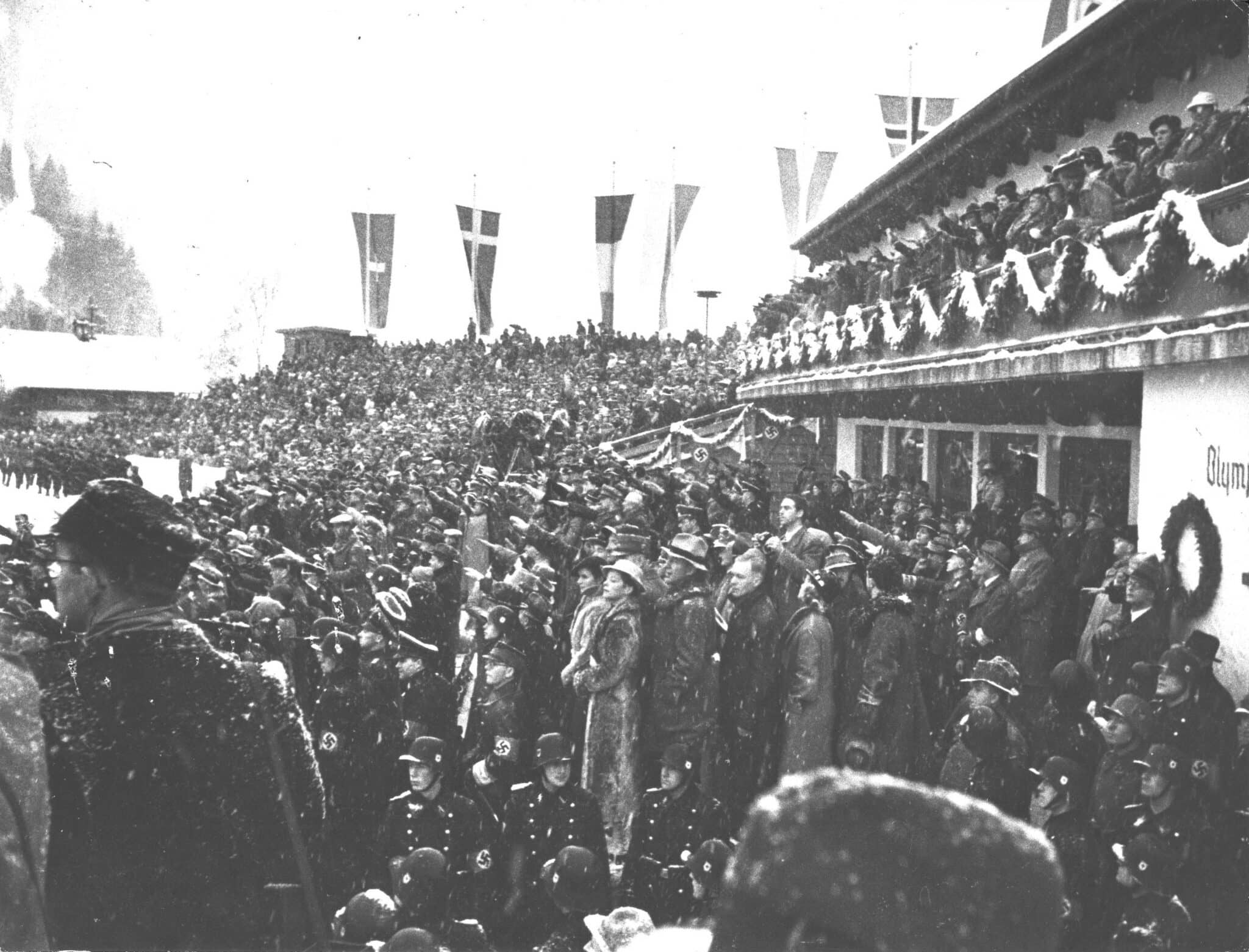
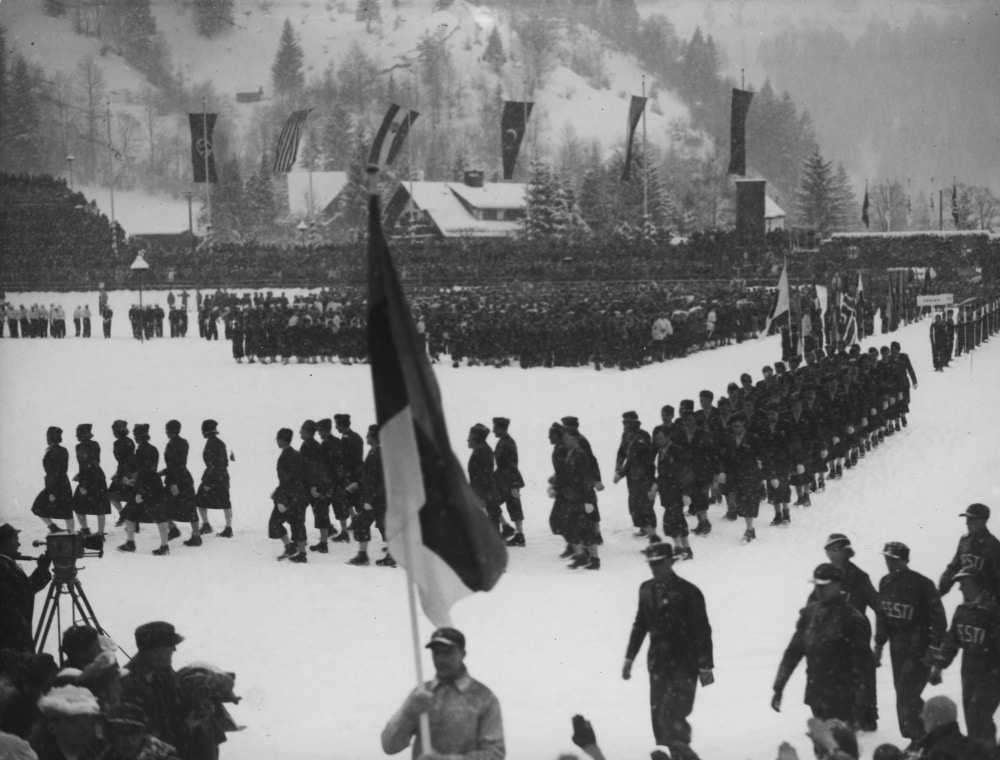
Reichskanzler Adolf Hitler declared open the IV. Olympic Winter Games in Garmisch-Partenkirchen on 6 February 1936 at 11 a.m. in front of around 20,000 spectators in the Olympic Stadium.
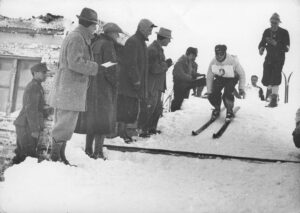
After the parade of the athletes, Karl Ritter von Halt in his welcome speech explicitly pointed out the peace message of the Olympic Games. 28 nations competed in eight different sports disciplines for medals In addition, two demonstration contests, icestocksport and the military ski patrol a predecessor of today’s biathlon completed the program. During the 10 days of competitions around 619,000 visitors watched the IV. Olympic Winter Games.
403 journalists coming from 29 countries reported out of Garmisch-Partenkirchen from special built press grandstands. Among other things, live broadcasts were an innovation. The total transmission time at home and abroad amounted to 301 hours.
Read more
| Disziplin | Gold | Silber | Bronze | ||||
| Athlet | Nation | Athlet | Nation | Athlet | Nation | ||
| Bob | Zweierbob | Ivan Brown | USA | Fritz Feierabend | Schweiz | Gilbert Colgate | USA |
| Alan Washbond | Joseph Beerli | Richard Lawrence | |||||
| Viererbob | Pierre Musy | Schweiz | Reto Capadrutt | Schweiz | Frederick McEvoy | Vereinigtes Königreich | |
| Arnold Gartmann | Hans Aichele | James Cardon | |||||
| Charles Bouvier | Fritz Feierabend | Guy Dugdale | |||||
| Joseph Beerli | Hans Bütikofer | Charles Green | |||||
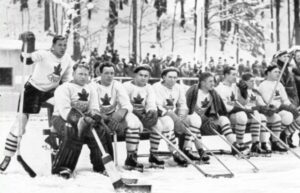
| Eishockey | Alexander Archer | Vereinigtes Königreich | Maxwell Deacon | Kanada | John Garrison | USA | |
| James Borland | Hugh Farquharson | August Kammer | |||||
| Edgar Brenchley | James Haggarty | Philip LaBatte | |||||
| James Chappell | Walter Kitchen | John Lax | |||||
| John Coward | Raymond Milton | Thomas Moon | |||||
| Gordon Dailley | Dinty Moore | Eldridge Ross | |||||
| Gerry Davey | Herman Murray | Paul Rowe | |||||
| Carl Erhardt | Arthur Nash | Francis Shaughnessy | |||||
| Jimmy Foster | Kenneth Farmer | Gordon Smith | |||||
| Jack Kilpatrick | David Neville | Francis Spain | |||||
| Archibald Stinchcombe | Ralph Saint – Germain | Frank Stubbs | |||||
| Robert Wyman | Alexander Sinclair | ||||||
| William Thomson | |||||||
| Eiskunstlauf | Damen | Sonja Henie | Norwegen | Cecilia Colledge | Vereinigtes Königreich | Vivi-Anne Hultén | Schweden |
| Herren | Karl Schäfer | Österreich | Ernst Baier | Deutsches Reich | Felix Kaspar | Österreich | |
| Paarlauf | Maxi Herber | Deutsches Reich | Ilse Pausin | Österreich | Emília Rotter | Ungarn | |
| Ernst Baier | Erik Pausin | László Szollás | |||||
| Eisschnelllauf | 500 m | Ivar Ballangrud | Norwegen | Georg Krog | Norwegen | Leonard Freisinger | USA |
| 1.500 m | Charles Matheisen | Norwegen | Ivar Ballangrud | Norwegen | Birger Wasenius | Finnland | |
| 5.000 m | Ivar Ballangrud | Norwegen | Birger Wasenius | Finnalnd | Antero Ojala | Finnland | |
| 10.000 m | Ivar Ballangrud | Norwegen | Birger Wasenius | Finnland | Max Stiepl | Österreich | |
| Ski Alpin | Kombination Herren | Franz Pfnür | Deutsches Reich | Gustav Lantschner | Deutsches Reich | Emil Allais | Frankreich |
| Kombination Damen | Christl Cranz | Deutsches Reich | Käthe Grasegger | Deutsches Reich | Laila Schou Nilsen | Norwegen | |
| Skilanglauf | 18 km | Erik Larsson | Schweden | Oddbjørn Hagen | Norwegen | Pekka Niemi | Finnland |
| 50 km | Erik Larsson | Schweden | Axel Wikström | Schweden | Nils-Joel England | Schweden | |
| 4 x 10 km Staffel | Kalle Jalkanen | Finnland | Sverre Brodahl | Norwegen | John Berger | Schweden | |
| Klaes Karppinen | Oddbjørn Hagen | Arthur Häggblad | |||||
| Matti Lähde | Olaf Hoffsbakken | Erik Larsson | |||||
| Sulo Nurmela | Bjarne Iversen | Martin Matsbo | |||||
| Spezialsprunglauf | Briger Ruud | Norwegen | Sven Selånger | Schweden | Reidar Andersen | Norwegen | |
| Nordische Kombination | Oddbjørn Hagen | Norwegen | Olaf Hoffsbakken | Norwegen | Sverre Brodahl | Norwegen | |
Demonstrationswettbewerbe 1936
Bei den Olympischen Winterspielen 1936 in Garmisch-Partenkirchen gab es neben den olympischen Wettbewerben noch zwei sogenannte Demonstrationswettbewerbe. Diese wurden durchgeführt, da die Disziplinen Eisstockschießen und Militärpatrouille nicht olympisch sind.
Beim Eisstockschießen handelt es sich um die deutsche Abwandlung vom Curling. International durchsetzen konnte sich die Sportart nicht aber sie kann heute noch im Olympia-Eissportzentrum in Garmisch-Partenkirchen von jedem interessierten ausprobiert werden.
Ganz anders als die Militärpatrouille. Diese gilt als Vorläufer des heutigen Biathlons. Jede Patrouille bestand aus einem Offizier, einem Unteroffizier und zwei Mann. Die Patrouillen mussten eine 25 km lange Strecke mit Rucksack und Gewehr überwinden und dabei eine Übung im Scharfschießen auf drei 150 Meter entfernte Ballons absolvieren. Dabei starteten alle Mitglieder des Patrouillen-Quartetts gemeinsam und durften mit einem maximalen Abstand von 30 Sekunden das Ziel überqueren.
| Disziplin | Platz 1 | Platz 2 | Platz 3 | ||||
| Athlet | Nation | Athlet | Nation | Athlet | Nation | ||
| Eisstockschießen | Einzel – Weitschießen | Georg Edenhauser | Österreich | Friedrich Mosshammer | Österreich | Ludwig Retzer | Österreich |
| Einzel – Zielschießen | Ignaz Reiterer | Österreich | August Brunner | Deutsches Reich | Karl Wolfinger | Tschecho- slowakei | |
| Mannschaft | Wilhelm Silbermayr | Österreich | Georg Redel | Deutsches Reich | Josef Hödl- Schlehofer | Österreich | |
| Anton Ritzl | Ferdinand Erb | Johann Mrakitsch | |||||
| Otto Ritzl | Johann Eibach | Rudolf Wagner | |||||
| Wilhelm Pichler | Josef Lenz | Friedrich Schieg | |||||
| Rudolf Rainer | Alois Dirnberger | Hubert Lögler | |||||
| Militärpatrouille | Enrico Silvestri | Italien | Eino Kuvaja | Finnland | Gunnar Wåhlberg | Schweden | |
| Luigi Perenni | Olavi Remes | Seth Olofsson | |||||
| Stefano Sertorelli | Kalle Arantola | Ragnar Wiksten | |||||
| Sisto Scilligo | Olli Huttunen | Johan Westberg | |||||
Medaillenspiegel der IV. Olympischen Winterspiele 1936 in Garmisch-Partenkirchen
| Platz | Land | Gold | Silber | Bronze | Gesamt | ||
| 1 | Norwegen | 7 | 5 | 3 | 15 | ||
| 2 | Deutsches Reich | 3 | 3 | – | 6 | ||
| 3 | Schweden | 2 | 2 | 3 | 7 | ||
| 4 | Finnland | 1 | 2 | 3 | 6 | ||
| 5 | Schweiz | 1 | 2 | – | 3 | ||
| 6 | Österreich | 1 | 1 | 2 | 4 | ||
| 7 | Vereinigtes Königreich | 1 | 1 | 1 | 3 | ||
| 8 | USA | 1 | – | 3 | 4 | ||
| 9 | Kanada | – | 1 | – | 1 | ||
| 10 | Frankreich | – | – | 1 | 1 | ||
| 11 | Ungarn | – | – | 1 | 1 | ||
| Total | 17 | 17 | 17 | 51 | |||
Medaillenspiegel der Vorführungswettbewerbe 1936
| Platz | Land | Gold | Silber | Bronze | Gesamt | ||
| 1 | Österreich | 3 | 1 | 1 | 5 | ||
| 2 | Italien | 1 | – | – | 1 | ||
| 3 | Deutsches Reich | – | 2 | 1 | 3 | ||
| 4 | Finnland | – | 1 | – | 1 | ||
| 5 | Schweden | – | – | 1 | 1 | ||
| 6 | Tschechoslowakei | – | – | 1 | 1 | ||
| Total | 4 | 4 | 4 | 12 | |||
Until 1933, the Olympic idea for the Nazis was presumed to be “Jewish pacifistic” infernal stuff, targeting at an effeminacy and weakening of the German people. Sports for National Socialists served mostly to create militarily useful aggressiveness and combat readiness.
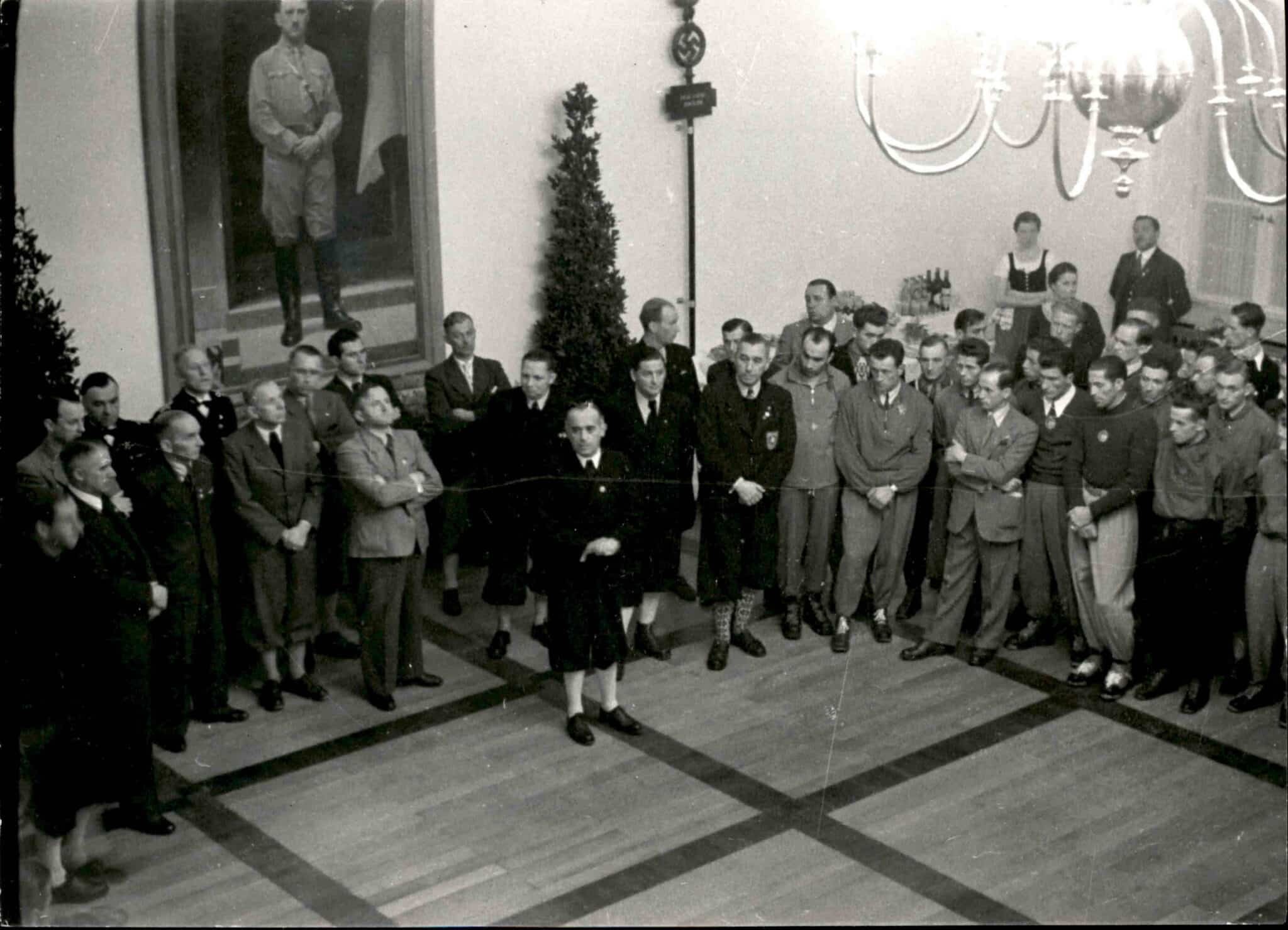
After the “seizure of power”, Adolf Hitler and Joseph Goebbels realized the possibility to exploit the Olympic Games to cover up the buildup of arms, and to create a sugarcoated image of a “new peaceful Germany”. The inhabitants of Garmisch-Partenkirchen were supposed to play a part in this game. The goal was to convince the visitors of the German love for peace and revise the possibly existing impression of a barbaric dictatorship.
Read more
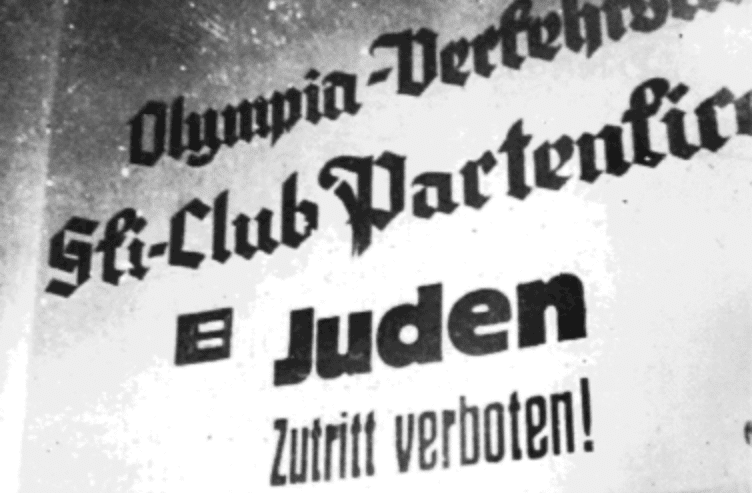
Already before 1933, Jewish guests were the object of massive National Socialist attacks. After 30 January 1933, the openly displayed antisemitism continued without restraint. Decisions of the local counsels and a flood of anti-Jewish signs and panels testify of this fact in the towns Garmisch and Partenkirchen, mostly during the year of 1935 in preparation of the Olympics.
Threats to transfer the Olympic Games to another country because of constant stigmatization of the German Jews hung over the heads of the officials. At this point, as Olympic Games at Garmisch-Partenkirchen seemed to be endangered, high National Socialist officials interfered in person. Instructions, directives and orders were issued in January 1936, and for the time of the event all infamous signs disappeared.
From Hitler’s point of view the Winter Games were supposed to be a test for the much more important Summer Games at Berlin. Predominantly, the focus was on propaganda and demonstration of power on site. The positive reports of the international press added significantly to the success of the propaganda. Especially the Olympic film issued by the Reich Propaganda Ministry made a lasting impression to many.
The official poster for the Olympic Winter games was created by the Munich artist Ludwig Hohlwein. It shows a skier with the five Olympic rings on his breast, holding his skis in his left hand. His right hand, pointing upwards, allowed plenty of space for speculation. Sportsmanlike gesture or „Nazi salute“?
Read more
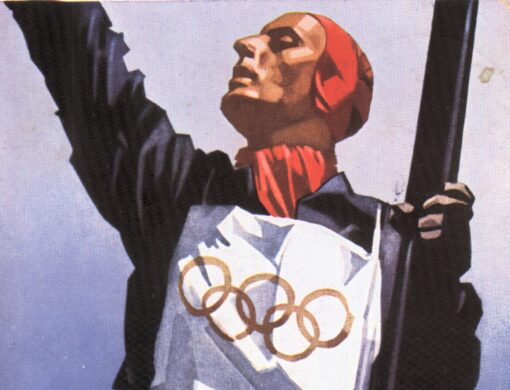
Das offizielle Werbeplakat (deutsch)
Was hält er in der Hand?
Da die Geste von offizieller Seite nie erklärt wurde, begann mit der Veröffentlichung des Plakats 1934 ein Rätselraten über den Sinn und Zweck der ausgestreckten rechten Hand.
Die schwedische Zeitung Morgontidningen in Göteborg befragte seine Leser und hatte für die besten und unterhaltsamsten Antworten Preise ausgesetzt.
Der Fantasie der Leserinnen und Leser waren keine Grenzen gesetzt. Ein paar Beispiele:
The official advertising poster (english)
What is he holding in his hand?
Since the gesture was never explained by the official side, speculation about meaning and purpose of the outstretched right hand started with the publication of the official poster in 1934.
The Swedish newspaper “Morgontidningen“ at Gothenburg asked their readers offering prizes for the best and funny answers.
To the imagination of the readers were set no boundaries. Some examples:
Folgend sehen Sie die Vorschläge der schwedischen Leser:

The propaganda of the NS regime was not able to mislead all with the beautiful make-believe of the Winter Games. The day before the opening ceremony, the “Pariser Tageblatt” issued a critical comment under the headline “Inactivity of Brains” emphasizing again how irreconcilable big the gap between the goals of the Olympic and the NS movement actually was. Some athletes took part in the boycott movement. The French Jewish bobsledder Philippe de Rothschild set the clearest sign with his cancelation, taking stand against the discrimination of the Jewish athletes.
The author Albrecht Haushofer later interpreted the Winter Games as an ominous warning before the forthcoming war. The Nazis murdered Haushofer in 1945.
Read more
Because Japan was at war with China as of 1937, the Japanese town of Sapporo was forced to return the V. Olympic Winter Games of 1940 to the International Olympic Committee. Since the applications of Oslo and St. Moritz failed, the Third Reich got the opportunity to hold again the Winter Games at Garmisch-Partenkirchen.
The IOC did not see the Nuremberg racial laws, the incidents of the so-called “Night of Broken Glass”, or the already existing concentration camps Dachau, Buchenwald, Sachsenhausen and Mauthausen as an impediment for the assignment of the Olympic Winter Games to Garmisch-Partenkirchen.
Only the invasion of Poland by the Nazis in 1939 and the beginning of the Second World War finally forced the IOC to cancel the V. Olympic Winter Games.
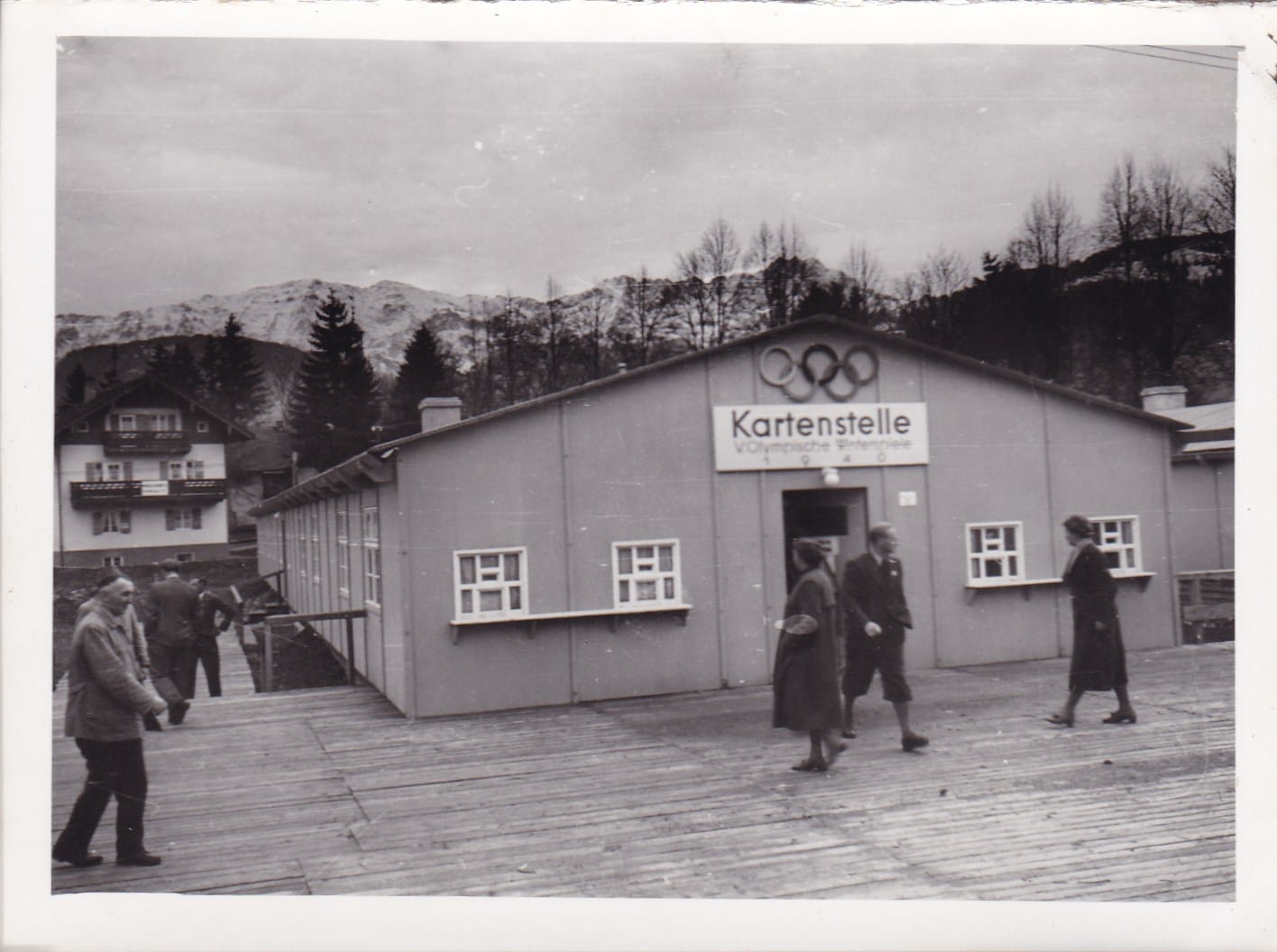
Olympische Winterspiele 1940 (deutsch)
„Die Spiele des Jahres 1940 müssen die Spiele des Jahres 1936 übertreffen.“
So formulierte Adolf Hitler das Ziel, was auch für die geplanten olympischen Bauten galt:
Das Gemeindebauamt veranschlagte für alle Baukosten 7,9 Millionen Reichsmark.
Nach Beginn des Überfalls auf Polen am 1. September 1939 kamen die Bauarbeiten langsam zum Erliegen. Am 19. Oktober befahl Berlin schließlich die Arbeiten weitestgehend stillzulegen.
Olympic Winter Games 1940 (english)
“The games of 1940 must outperform the games of 1936.”
This is how Adolf Hitler set the goal, also applying for the planed Olympic buildings:
The building authority of the community estimated all construction costs at 7.9 million Reichsmark. After the assault of Poland on 1 September 1939, construction works slowly seized up. On 19 October 1939, Berlin finally ordered to stop the works.

FIS = Fédération Internationale de Ski (International Ski Federation)
WM = World Championship
BMI = Federal Ministry of the Interior and Community
DSV = German Ski Association
IOC = International Olympic Committee
KZ = Concentration Camp
NSDAP = National Socialist German Workers‘ Party
German OC = National Olympic Committee
NS = National Socialism
Literature:
2016, Josef Ostler, Peter Schwarz, Alois Schwarzmüller, Franz Wörndle, The Reverse Side of the Medal. IV Olympic Winter Games Garmisch-Partenkirchen 1936. Documentation for the permanent exhibition in Garmisch-Partenkirchen. The link to the GaPa Tourism online shop can be found here.
Internet radio sites:
www.gapgeschichte.de
www.historisches-lexikon-bayerns.de
Radio:
Bavarian Broadcasting
Photos:
Market archive Markt Garmisch-Partenkirchen
Films:
„Youth of the World“ official film, IV Olympic Winter Games, Garmisch-Partenkirchen 1936, produced on behalf of the Reich Propaganda Directorate of the NSDAP, 32 min, Federal Archives Berlin
CNN – Documentary on the 1936 Olympic Winter Games in Garmisch-Partenkirchen from 2019, 3 min
Dann kontaktieren Sie uns einfach jederzeit unter folgenden Kontaktmöglichkeiten:
Sie sehen gerade einen Platzhalterinhalt von Accessibility Widget. Um auf den eigentlichen Inhalt zuzugreifen, klicken Sie auf die Schaltfläche unten. Bitte beachten Sie, dass dabei Daten an Drittanbieter weitergegeben werden.
Mehr InformationenSie sehen gerade einen Platzhalterinhalt von Vimeo. Um auf den eigentlichen Inhalt zuzugreifen, klicken Sie auf die Schaltfläche unten. Bitte beachten Sie, dass dabei Daten an Drittanbieter weitergegeben werden.
Mehr InformationenSie sehen gerade einen Platzhalterinhalt von YouTube. Um auf den eigentlichen Inhalt zuzugreifen, klicken Sie auf die Schaltfläche unten. Bitte beachten Sie, dass dabei Daten an Drittanbieter weitergegeben werden.
Mehr InformationenSie sehen gerade einen Platzhalterinhalt von Google Maps. Um auf den eigentlichen Inhalt zuzugreifen, klicken Sie auf die Schaltfläche unten. Bitte beachten Sie, dass dabei Daten an Drittanbieter weitergegeben werden.
Mehr InformationenSie sehen gerade einen Platzhalterinhalt von Google Maps. Um auf den eigentlichen Inhalt zuzugreifen, klicken Sie auf die Schaltfläche unten. Bitte beachten Sie, dass dabei Daten an Drittanbieter weitergegeben werden.
Mehr InformationenSie sehen gerade einen Platzhalterinhalt von Mapbox. Um auf den eigentlichen Inhalt zuzugreifen, klicken Sie auf die Schaltfläche unten. Bitte beachten Sie, dass dabei Daten an Drittanbieter weitergegeben werden.
Mehr InformationenSie sehen gerade einen Platzhalterinhalt von OpenStreetMap. Um auf den eigentlichen Inhalt zuzugreifen, klicken Sie auf die Schaltfläche unten. Bitte beachten Sie, dass dabei Daten an Drittanbieter weitergegeben werden.
Mehr Informationen